
Disability & Kink (Part 2): A Practical Guide to Accessible Scenes
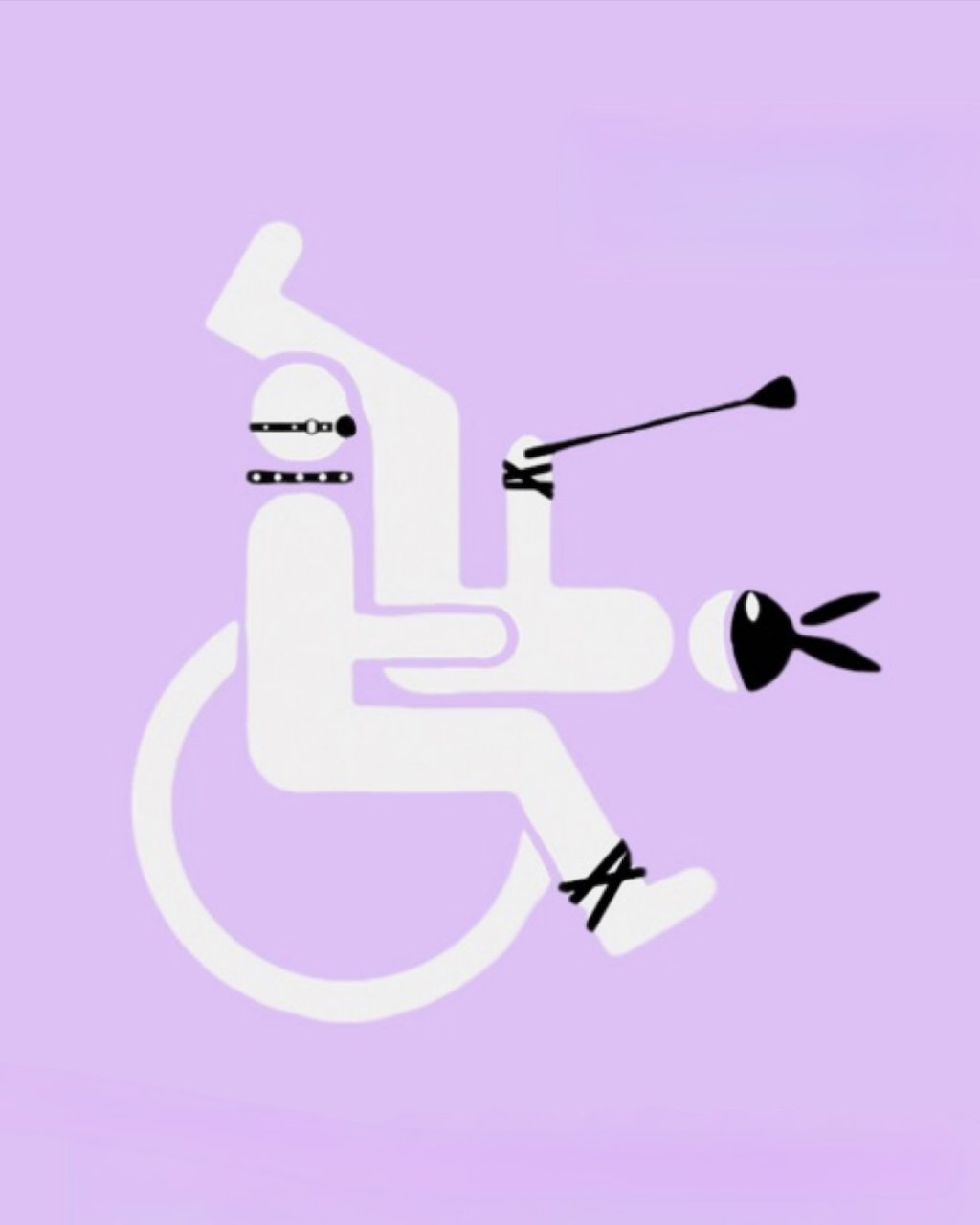
When we build scenes with access in mind, play gets more creative, consent gets clearer, and power exchange gets deeper.
This is the second post in my three-part miniseries on disability and kink. If you haven’t read part one yet, I recommend starting there as it lays the foundation for what follows.
In the first post, we named the problem. Ableism is woven into kink through assumptions, barriers, and language that work to decide who gets to play and how.
Part two is all about practice. Accessibility isn’t a vibe or a checklist, it’s a skill set. It’s something we build intentionally. This post focuses on how we can actually do that: concrete practices, examples, and ideas that you can incorporate into your scenes.
Please note: this is a non-exhaustive list of suggestions that will not be applicable to every person, dynamic, or disability. These are simply some ideas to help get the ball rolling.
As a bonus, I’ve created a basic negotiation guide to help you plan scenes with accessibility in mind. It’s available to download at the bottom of this post.
Negotiate for access, not just limits
Accessible kink begins long before a scene starts. During negotiation, we tend to focus on boundaries and hard limits (which is definitely important) but accessibility is often treated as secondary or forgotten altogether. Instead, access needs should be part of the core conversation.
Normalizing fluctuating capacity is key. Disabled or not, our bodies change day to day, even hour to hour. Creating backup plans, softer landings, or alternative ways to continue power exchange helps ensure that needing to stop or adjust doesn’t feel like failure or loss of control.
What to do:
Add an access section to your negotiation checklist alongside limits and desires.
Ask questions that invite nuance, not yes/no answers.
Name fluctuating capacity upfront (pain, fatigue, sensory load).
Agree on non‑failure endings (i.e. switching to grounding, holding, or verbal power exchange).
Try this:
“What does your body need to feel supported during a scene?”
“Are there positions, sensations, time limits, or pacing that work better for you?”
“If your capacity changes mid‑scene, what are some ways that we can handle that?”
Design flexible scenes (not endurance tests)
Many kink scenes are built around rigid scripts like: hold this position, endure this sensation, last this long. Accessible scenes prioritize flexibility over endurance. Instead of designing a scene that only works if everything goes exactly as planned, design scenes that can shift without losing meaning. Shorter scene arcs, adjustable pacing, and multiple options for positions or sensations allow play to remain intentional even when bodies need something different.
What to do:
Replace rigid scripts with adjustable structures.
Treat adaptation as skill, not compromise.
Make a clear distinction between intensity and stamina.
Try this:
Use modular scenes: short arcs (5–10 minutes) that can repeat, pause, or change.
Instead of focusing on pain, create intensity using texture, temperature, sound, words, ritual, or anticipation.
Shift goals from forced endurance to individual control.
Example: “Don’t stop until I say so” (forced endurance) can change to “it’s your choice when to stop” (individual-control).
Seamlessly integrate alternatives to positions like kneeling or standing by building them into the scene and setting them up in advance (chairs, cushions, wall support, lying positions, etc.)
Example: “Kneel at my feet” can quickly pivot to “lay at my feet” if you have a floor mat laid out already.
Layer your communication tools
We know that communication is NOT “one-size-fits-all”. Relying on a single safeword or communication style assumes that everyone processes sensation, stress, and language the same way. But that simply isn’t true.
Accessible kink uses layered communication tools (verbal safewords paired with non-verbal options) that account for dissociation, shutdown, delayed processing, or sensory overload. Remember: different communication does not equal different consent.
What to do:
Build redundancy (the more communication tools, the better).
Try this:
Use verbal safewords plus non-verbal backups.
Example: An object to drop, tap-outs, hand signals, colour cards, etc.
Plan explicit check-ins. This reduces the burden on disabled folks to constantly self-advocate in the middle of a scene.
Example: “I’ll check in every 3 minutes unless you signal otherwise”
Use written or visual negotiation for people who process better through non‑verbal cues.
Make a clear plan for things like dissociation or sensory overload before the scene begins.
Get creative with pervertables!

In kink, “pervertables” are everyday, non-sexual objects that get repurposed for play. Think items you might already have at home: furniture, stuff in your freezer, household items, etc.
Pervertables matter a lot when we talk about accessibility. Traditional kink gear can be expensive, physically demanding to use, or designed with very narrow assumptions about bodies, strength, grip, balance, and stamina. Pervertables push back against the idea that kink has to look a certain way and make it easier to play in non-dungeon spaces (which are rarely accessible to all). From my experience, pervertables ultimately open the door to adaptability, creativity, and customization.
What to do:
Broaden your idea of kink to include objects, actions and setups that aren’t typically considered kinky.
Use what you already have to meet your scene partner where they’re at.
Let your imagination guide you!
Try this:
Instead of cuffs, use scarves or ties for lighter, softer restraints.
Instead of rope, use a yoga strap to bind/restrain someone (you can pull the sliding mechanism with your mouth).
Instead of traditional implements, use silicone kitchen tools for adjustable impact or sensation.
Instead of spanking benches, use comfy chairs, couches, or beds as support for positioning.
Instead of wax or ice, use heating pads and ice packs for temperature play (coordination/hand mobility not needed).
Instead of going to a dungeon, use playlists, lighting and scents to create a kinky atmosphere in any space.
Instead of holding stress positions, use pillows, yoga blocks, and rolled towels for joint support, elevation, or comfort.
Lean into your disabilities (use them to your advantage!)
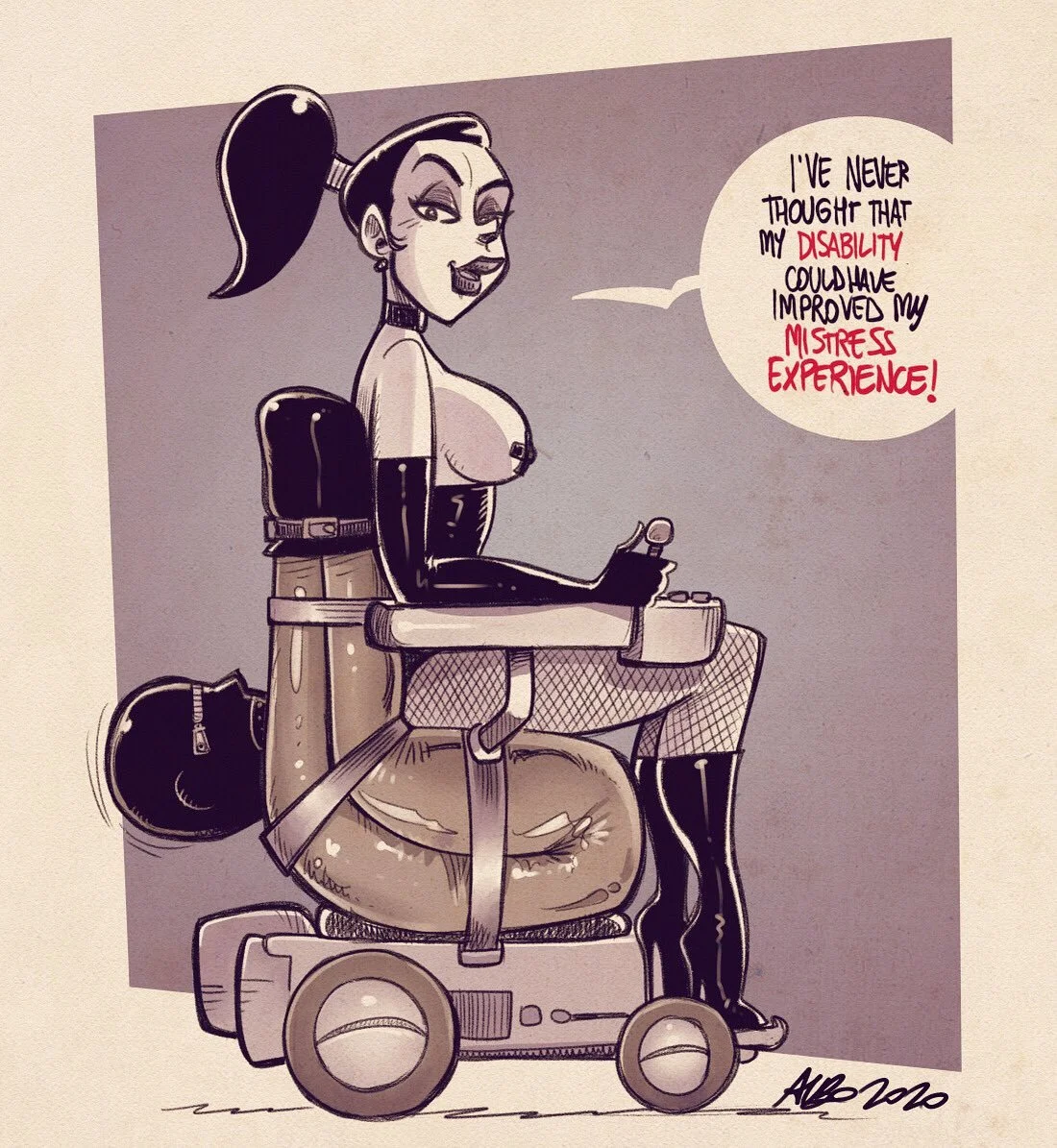
Disability doesn’t always have to be something you work around in kink, it can be something you actively work with. Instead of framing disability as a limitation to overcome, treat it as a source of possibility. Using disability to your advantage isn’t about fetishizing it, minimizing it’s impact, or pushing past limits, it’s about having some fun with the body you’re in.
What to do:
Reclaim your disability and use it to your benefit.
Take yourself a little less seriously (lightheartedness is incredibly valuable when it comes to kink).
Try this:
Hearing aid? Take it out and voila: sensory deprivation.
Cane? Sit down and beat your submissive with it.
Visual impairment? No need for a blindfold.
Glasses? Remove them for instant disorientation.
Touch aversion? The ultimate tease and denial.
Body tremors? Become a human vibrator (objectification, sensory play).
Require support? Use interdependence as servitude or erotic currency.
Approach aftercare as “access-care”
Aftercare is often treated as optional or assumed to look one specific way. In reality, aftercare is part of the scene’s infrastructure, and for many disabled kinksters it’s a major access need.
Accessible aftercare means planning collaboratively and ahead of time. It means recognizing that not everyone wants touch, eye contact or conversation, and that regulation might look like quiet presence, medication, or being left alone with intention.
What to do:
Treat aftercare as essential infrastructure, not an add‑on.
Plan aftercare together during negotiation (BEFORE the scene begins).
Clarify boundaries around touch, speech, and stimulation.
Normalize delayed or extended aftercare.
Try this:
Schedule post-scene check-ins (later that day, the next day, next week, etc.). Literally put them in your calendar before starting your scene.
Create a list of touch and non-touch options to easily refer to. It can be helpful to print out the list so you can simply point at an item instead of verbally asking for it.
Incorporate typical aftercare activities into the scene as protocol rather than waiting to do it all the at the end.
Examples: Demand strict water intake quotas (hydration), give mandatory “time-outs” (rest), create stretching protocols (pain management), administer periodic blindfolding (sensory relief). I recommend using timers and alarms on your phone for these types of things.
Prepare a sensory/aftercare kit and keep it within reach during your scene.
Ideas for your kit: blanket, sunglasses, candy, slippers, stuffed animal, earplugs, eye mask, handheld fan, a list of basic meditation/breathing/grounding techniques, smooth stones, baby wipes, stress ball, fidget toys, heating/cooling pad, colouring book/drawing tools, mouthwash, non-scented vaseline, massage tools, Playdoh. Whatever you want!
Negotiating accessible kink scenes (downloadable resource)
I’ve created a resource below to aid in your negotiation process. There are two download options:
Fillable Word Document
This option allows you to fill in the document directly on your computer. Simply click the grey shaded box you want to fill in and begin typing. You’ll need to open it in MS Word in order for the fillable feature it to work.
Printable PDF
This option is a one-page PDF designed for easy printing and viewing. You can also copy/paste the text into your own chart or worksheet if you prefer.
Final note: Bodies vary. Capacity fluctuates. Care is a skill. When we practice kink with access in mind, play gets more creative, consent gets clearer, and power exchange gets deeper.
That’s not less kink. That’s better kink.
Stay tuned for part three, where I’ll take the same practical approach but move on from personal scenes to physical spaces.