
Disability & Kink (Part 3): A Practical Guide to Accessible Events & Spaces
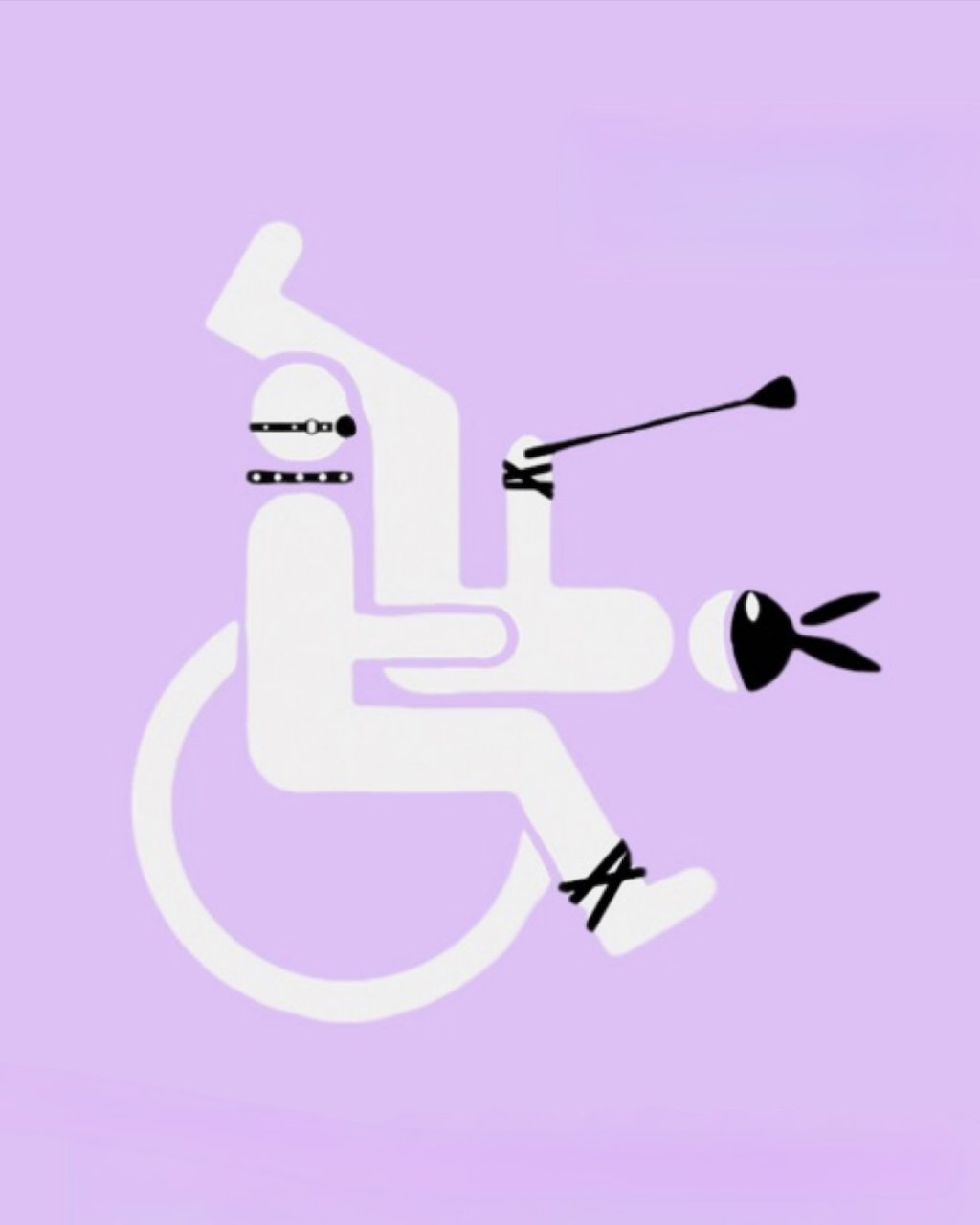
Accessible kink isn’t about accommodating a few exceptions. It’s about designing for reality.
This is the third and final post in my three-part miniseries on disability and kink. If you're just landing here, I recommend starting with part one (where we named the problem: ableism) and part two (where we got practical about individual scenes).
Part three moves from the personal to the collective. Scenes happen between people, but they also happen somewhere: a dungeon, a play party, a workshop, a club, a room booked for a private event. And every one of those spaces is making decisions about who can participate, whether the organizers realize it or not.
The more I write on this topic, the more I realize how vast it is. Instead of trying to cram everything into one post here, I’ve again decided to break things down even further.
This post is specifically geared towards spaces and organizers who host kinky events and parties. In a future post I will break down how to create an accessible dungeon in a similar way, so stay tuned!
Please note: This is a non-exhaustive list of suggestions that will not be applicable to every person, disability, or space. Not every idea will be possible for every venue, budget, or event.
You don't even need to do everything at once. Start somewhere, be transparent about it, and just keep going.
As a bonus, I’ve created a basic checklist to help you prepare spaces and events with accessibility in mind. It’s available to download at the bottom of this post.
Access starts before anyone walks through the door
In part one, I mentioned that "access" came up in four different flavours when I asked people what accessible kink meant to them: fiscal, digital, physical, and psychological. That's a useful framework for spaces, because it reminds us that the barriers begin long before the venue itself.
Digital access is the first gate.
If someone can't find out whether your event is accessible, they'll assume it isn't. Most disabled folks have learned (through experience) that "just ask!" usually means a lot of emotional labour followed by a vague answer.
An access statement flips that dynamic: it puts the burden of information on the organizer, where it belongs.
What to do:
Write an access statement and put it in every event listing. Not buried on a separate page, not as an “FAQ” within a pile of other questions.
Be specific and honest, including about what isn't accessible.
"There are three steps at the entrance and no ramp" is far more useful than "accessibility is limited".
Post photos of the entrance, the main play space, the washroom, and the quiet room so people can assess for themselves.
Include the venue's dimensions where relevant: door widths, stall size, elevator size, distance from the entrance to the play area.
Give people a way to ask questions (email, DM, form) and a named person who will answer them within a set timeframe.
Add an optional "access needs" field to your registration or vetting forms.
Make your digital materials accessible: image descriptions on flyers, plain language, readable fonts, captions on videos, no text-only-in-images.
Offer the event details in more than one format (a written post and a short video or audio version, for example).
Have directions, transit info, a map of the venue layout, the schedule, and the rules, clearly laid out so nobody has to figure it out on the spot.
A basic access statement might cover:
Entrance (steps? ramp? door width?)
Washrooms (accessible stall? gender-neutral?)
Seating (chairs: with or without arms? booths? high-tops? location?)
Lighting and sound expectations
A designated quiet or low-stimulation room
Scent policy
Mask policy
Service animal policy
Parking and transit
Who to contact for access needs
Make it affordable to be there
Fiscal access is one of the most overlooked barriers in kink, and it hits disabled people especially hard. Trust me when I say that disability is expensive. Many disabled folks live on fixed or reduced incomes, and events that cost $60+ per ticket (plus transit, plus a fetish-appropriate outfit, plus an attendant, plus drinks, plus fill-in-the-blank) are often out of reach.
What to do:
Offer sliding scale or “pay-what-you-can” tickets, no proof or explanation required.
Reserve a set number of free or low-cost tickets specifically for disabled attendees.
Provide a free ticket for attendants, support people, or interpreters. They're there to work, not to play.
Rethink refund policies. Flare-ups, pain days, and fatigue don't follow a 48-hour cancellation window. A no-questions-asked credit toward a future event costs you little and signals a lot.
Build volunteer or work-exchange options that accommodate different capacities (a shift at the check-in table is very different from hauling furniture).
Make coat/bag check “pay-what-you-can”. Carrying a bag all night is an access issue for many people.
Keep water free and easy to reach. Don't make hydration something people have to purchase or line up for. A watercooler and some disposable cups go along way.
Try this:
Budget for access from the start (interpreters, rentals, extra seating, accomodations) rather than treating it as an afterthought you can't afford.
Add a line to your ticketing page like: "If cost is a barrier, email us. We'll make it work." Then actually make it work.
Build in the quiet and lower the sensory load
Psychological and sensory access needs are just as real as physical ones, and are often even less considered. Play parties, kinky raves and fetish events tend to be loud, dark, crowded, strobe-lit and heavily scented. That combination can be a wall for neurodivergent folks, people with chronic pain or migraines, people with PTSD, and plenty of others.
What to do:
Provide free earplugs at the door.
Create a designated quiet room: low lighting, minimal sound, comfortable seating, no play, no socializing expected. This is not the same as the aftercare corner.
Avoid strobe and rapidly flashing lights.
I know that these are a staple in club environments and may be tough to work around, so at the very least make sure to clearly announce them in advance on your event listing and keep them confined to one area when possible.
Some clubs have a no-sunglasses policy. Scrap this rule for your event and allow people to wear them.
At play parties, keep music at a level where people can still hear a safeword and a conversation. If you need to shout, it's too loud.
Adopt a scent-reduced policy (no perfume, cologne, incense, or heavily scented candles) and say so in your listing. Having multiple air purifiers positioned around the space to keep things fresh can be beneficial here.
Use fragrance-free cleaning products and hand soap where you can.
Publish a schedule and stick to it. Predictability is an access need.
Give a heads-up before any sudden changes: lights going down, a demo starting, the music switching.
Offer a "first-timer" or orientation tour at the start of the night so people know the layout before it gets crowded.
Reduce social load by offering a colour-coded wristband or pin system (for example: green = happy to be approached, red = please don't approach me).
Give people explicit permission to leave a scene or a space without explanation, and put that in the rules.
Try this:
Put a small "regulation station" in the quiet room: earplugs, eye masks, water, a few fidget items, a printed list of grounding techniques. It costs almost nothing and tells people that their nervous systems were expected and welcome.
Design the physical space for real bodies
This is the part most people think of when they hear "accessible", and it matters enormously, but I'd push back on the idea that it's only about ramps. Physical access is about whether someone can get in, get around, use the equipment, use the washroom, rest when needed, and get out safely. (This applies for everyone by the way, not just disabled folks.)
I know that most of us don't own our venues, and perhaps things would look a lot different if we did. But unfortunately, that’s just not the reality we’re in. The good news is that even in a rented space, there are choices about layout, furniture, and setup that make a real difference.
Getting in and around:
Prioritize step-free entry when choosing venues. If a space isn't step-free, be upfront in your listing and think about whether it's the right venue for a public event.
There are temporary solutions like fold-up/“suitcase” ramps and stop-gaps that may help in some cases, but it’s best to choose a place where very basic access needs have been considered.
Check that the accessible entrance is unlocked, staffed, and clearly signed (not the back loading door that someone has to phone about).
Confirm the elevator works and will remain in service for the duration of your event.
Keep pathways clear and wide (at least a wheelchair's width). Remember that mobility aids need turning room.
Tape down cords and cables, and even loose rugs (put a sticky mat under them and/or tape down the corners). In dimly lit spaces, it’s best to remove low tables and anything that's a tripping hazard altogether.
Make sure the accessible washroom is actually accessible (not used as storage, not locked, not down a flight of stairs) and that it has grab bars, a working lock, room for a second person, and space to turn around.
Have an evacuation plan that includes people who can't use stairs, and make sure your team knows it.
Seating and furniture:
Provide seating everywhere, not just in the social area, and not just in the back. Put seating on the sidelines of the dance floor, the dungeon, the stage, the bar, literally anywhere people will be. Standing for hours is an access barrier that people rarely name.
Include a range of seating: chairs with arms (for getting up), chairs without arms (for larger bodies), sturdy chairs with higher weight limits, etc.
Include play furniture that works for different bodies: something to lie on, something at a height that doesn't require kneeling, something with back support. A padded massage table does a surprising amount of work.
Keep a supply of cushions, yoga blocks, wedges, and folded blankets near the play areas for positioning and joint support. Don’t just keep them all for the “plounge”.
Cap attendance at a level where people can actually move around and find a chair.
Other considerations:
Think about temperature. Many disabilities affect temperature regulation, and from my own experience, dungeon spaces are often freezing or sweltering. Offer blankets, fans, and a spot near (or away from) the heat. Having cold water and hot tea available is always a nice touch.
Set up a designated spot to park mobility aids near play areas where they won't be moved or touched or tripped over.
Whenever possible, keep at least one play station properly lit for folks with low vision.
Post large-print, high-contrast signage for washrooms, exits, the quiet room, and the first aid station.
Black/red is NOT a good colour combo for visibility even though we loveeeee to use it in kinky spaces, so try to get a little more creative with your designs.
Here’s a good tool to use: https://webaim.org/resources/contrastchecker/
Try this:
Walk through your venue before the event and imagine doing so in a wheelchair, on crutches, with a cane, with low vision, or while exhausted. Drag your feet. Shuffle a chair. Close your eyes and have someone guide you around.
Where would you get stuck? Where would you need to sit down? Where would you need help, and would anyone notice?
Write rules that don’t accidentally exclude
Every event has rules, and rules are good. But many standard kink space rules were written with a particular body in mind, and they end up excluding disabled people without anyone intending it.
What to do:
Review your dress code.
When fetish wear is mandatory, expand your definition to include items outside of the traditional leather/latex norm. "Fetish wear required" can exclude people who can't wear certain fabrics, people who need adaptive clothing, or people who simply can't afford it.
Explicitly allow comfortable shoes, braces, compression garments, and adaptive clothing regardless of dress code. State this in your policies.
Make it explicit that mobility aids, medical devices, and medications are welcome everywhere, including on play furniture and in play areas. Yes, this needs to be said out loud.
Reconsider blanket phone bans. Some people rely on phones for glucose monitors, communication, medication reminders, or safety. Build in an exception process that doesn't require public justification (a discreet sticker on the phone works well).
Clarify your service animal policy and make sure it complies with local law. Then post it.
Have a clear mask/illness policy and stick to it. For immunocompromised folks, this is not a preference. It's the difference between attending and not.
Have free masks available at the door.
Consider having “mask-only” hours. Perhaps start the event a little earlier and designate the first hour for masks-on play.
Make sure "no sitting on the equipment" style rules have an alternative for people who need to rest.
Allow food and drink where it's needed for medical reasons, even if the play space is otherwise food/drink-free.
Don't require people to disclose their disability to access an accommodation.
Write your rules in plain language. Post them in digital formats and offer large print copies at the door.
Review your consent and etiquette guidelines for ableist language (see part one), and update them.
Try this:
Add a line to your rules: "If any of our policies create an access barrier for you, talk to us. We will find a way." Then actually find a way. (And if you can’t find a way, it’s time to reconsider your venue choice.)
Train your team to see access as part of safety
Dungeon monitors (DMs), greeters, bartenders, bouncers and volunteers are the people who actually shape someone's experience once they arrive. If they haven't thought about disability, they'll likely default to the same assumptions we unpacked in part one: that a disabled person is fragile, that a non-standard scene is unsafe, and that an access need is a disruption.
What to do:
Name an access point-person for every event, introduce them at the start, and make them easy to identify (for example: a lanyard, a sash, a specific-coloured armband).
Make sure your team knows how to say "I don't know, let me find out" instead of guessing or assuming.
Make sure your team knows the location of the accessible entrance, washroom, quiet room, and first aid station well enough to walk someone there.
***Make sure your team knows not to move, lean on, or touch someone's mobility aid without asking.***
Train DMs to recognize that scenes can look different (someone playing from a wheelchair, someone using a non-verbal safeword, someone taking a medication break mid-scene) without being unsafe.
Teach the difference between checking in and interrupting. Ask the players how they'd like DMs to approach if there's a concern.
Give your team a short script for offering help: "Would you like a hand with that?" and then respect the answer, whatever it is.
Be prepared for medical situations that aren't kink-related (seizures, blood sugar drops, dislocations, panic attacks). Invite attendees to share their care protocols with the DMs if desired.
Have at least one person on site with up-to-date first aid training, and a stocked first aid kit that includes things like glucose tablets, baby aspirin, instant hot/cold packs, and electrolyte packets.
Do a short debrief with your team after the event about what came up.
Try this:
Walk your event team through three scenarios:
A guest arrives with an attendant
A guest needs to leave a scene suddenly due to a pain flare
A guest asks where the quiet room is
If your team doesn't have a smooth answer for all three, that's your homework.
Ask, listen, compensate, and keep going
Here is the thing about accessibility: you can't really get it right from the outside. The people who know what your space needs are the disabled people who've been trying (and often failing) to attend it.
What to do:
Ask disabled community members what would make your space work for them, and then actually implement what they tell you. Compensate people for that expertise. ***Consultation is labour.***
Invite disabled kinksters to present, teach, and DM, not just to attend.
Create a feedback channel that doesn't require confronting an organizer in person (an anonymous form works well).
Report back. When you make a change based on feedback, say so publicly. It builds trust and shows others what's possible.
Keep a running "access log" of what you've tried, what worked, and what's still on the list, and review it before every event.
Try this:
After each event, ask one simple question in your follow-up: "Was there anything that made it harder for you to attend or participate?"
Read the answers with an open mind and a willingness to be uncomfortable.
Download this checklist for your next event!
Here's everything above, condensed into something you can print and bring to your next planning meeting. Check off what you've done, note what's not possible yet, and be upfront about the gaps in your event.
Final note: Accessibility in kink spaces is not about perfection, and it's not about lowering the bar. It's about widening the door (see what I did there). Nothing I've suggested here makes kink less intense, less edgy, or less hot. If anything, spaces that take care seriously tend to be the ones where people feel safe enough to actually play and let go.